Cloudflare
· 5 min readDriving enterprise growth with digital and go-to-market transformation
Shifting Cloudflare to modern GTM strategy results in significant enterprise growth
Cloudflare's $30M demand engine had scale, budget, and talent. What it lacked was unified measurement, targeting, and execution to translate spend into pipeline outcomes. We led the rebuild so teams could shift from high-volume lead generation to opportunity-driven growth, align globally, and optimize around what actually moved revenue. The result? Digital-sourced pipeline tripled from ~$197M to ~$612M over three years. Over the same period, enterprise accounts ($100K+ annualized revenue) grew 86%, from 2,156 (Mar 2023) to 4,009 (Sep 2025), and now represent 73% of total revenue.
Impact Metrics
86%
Growth in enterprise customer accounts ($100K ARR)
Expanded from 2,156 (Mar 2023) to 4,009 (Sep 2025) high-value accounts, now contributing 73% of total revenue
131%
YoY increase in marketing-sourced pipeline
Driven by channel optimization and prioritizing high-intent lead types (hand-raisers vs MQLs).
129%
YoY improvement in pipeline per media dollar
Achieved through tighter account targeting and segmented messaging for practitioners and leadership personas.
$30M
Annual digital budget governed and optimized
Built the visibility and decisioning layer required to manage investment at global scale.
The Challenge
Cloudflare's field and demand marketers operated across micro-segments with limited global visibility. KPIs were optimized for cost per lead, which rewarded volume and masked quality, profitability, and true pipeline contribution.
Key issues that blocked growth:
- Fragmented global execution, despite significant investment and channel activity.
- Incentives built around low-quality lead volume, which pulled teams away from opportunity creation.
- Generic messaging across thousands of target accounts, weakening relevance and conversion.
- Measurement confusion across stakeholders, reducing confidence and slowing decisions.
- Low-quality partner lead buying with minimal opt-in compliance, creating downstream risk and poor performance signal.
- Low experimentation velocity across messaging, targeting, and budget allocation.
- Inefficient agency execution, including offshored resourcing and cost bloat.
The Approach
In a highly competitive cybersecurity and networking market, the margin for error is thin. Growth only happens when strategy, targeting, creative, conversion, and measurement operate as one system. So we built the system.
Rebuilt the measurement model around outcomes
We replaced a rigid, overly complex demand measurement approach with a flexible data model that supported granular optimization and consistent global reporting. Tooling and visibility were established using Skai, Tableau, and BigQuery, enabling campaign owners and leaders to see performance through the same lens.
Reallocated digital investment to in-market buyers
Instead of spreading spend across broad audiences optimized for low CPL, we shifted investment to in-market buyer signals and prioritized the lead types most correlated with pipeline creation.
Overhauled GTM targeting and persona messaging
We redesigned account and persona strategy to reduce generic messaging, improve relevance, and support segmented execution that mapped to how buyers actually evaluate and purchase.
Rebuilt conversion paths end-to-end
We treated conversion like a product. Landing pages, email, and key touchpoints were rebuilt to remove friction and better reflect intent, persona, and stage.
Modernized the demand motion with PLG plus sales-led alignment
We supported a combined approach where product-led demand and sales-led execution reinforced each other, improving pipeline quality and momentum across segments.
Elevated creative and advertising execution
We reimagined visuals and messaging to stand out in a traditionally "bland" category, improving engagement and making the value proposition clearer across channels.
The System in Action
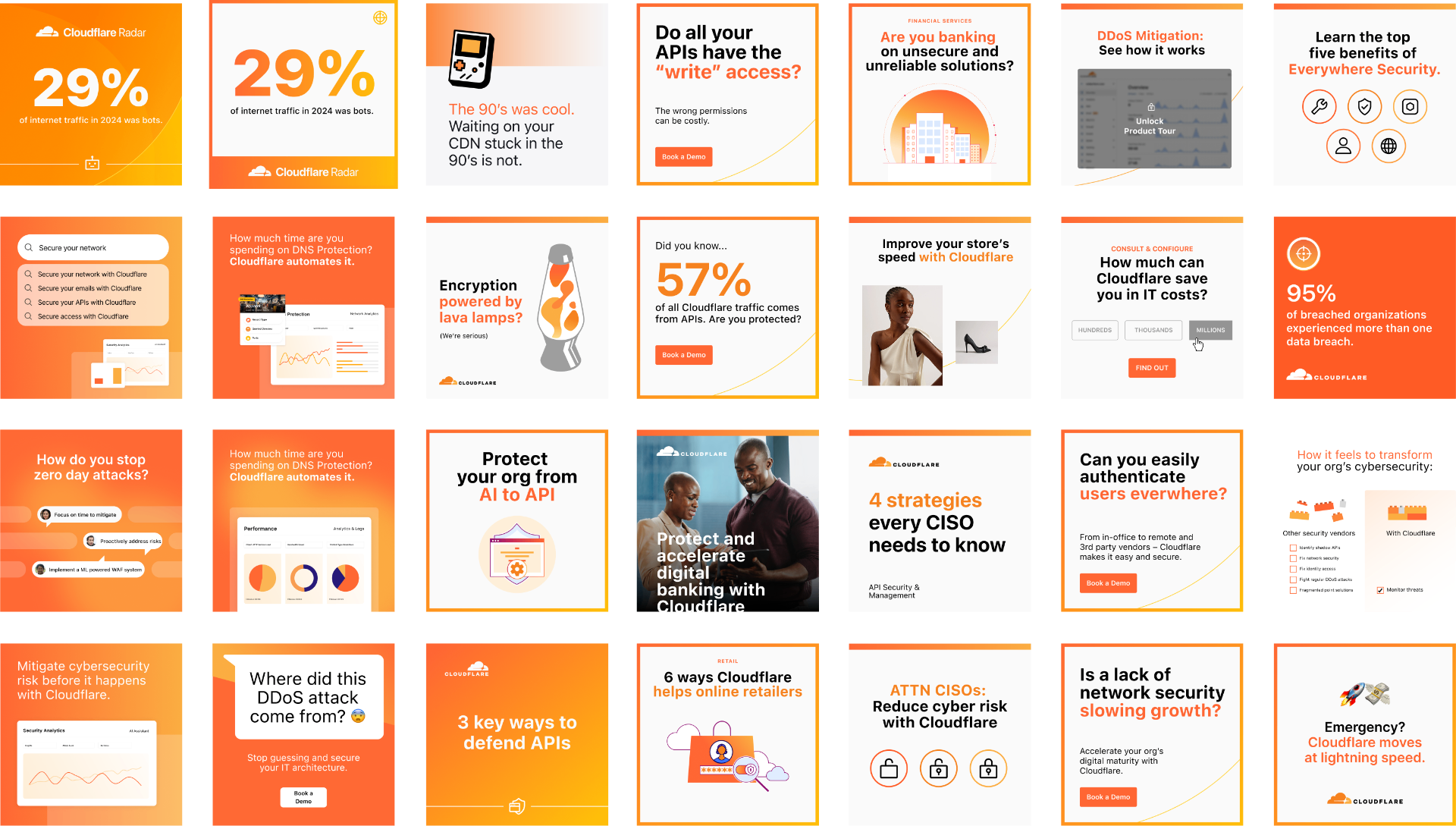
Paid media campaigns across search and social channels
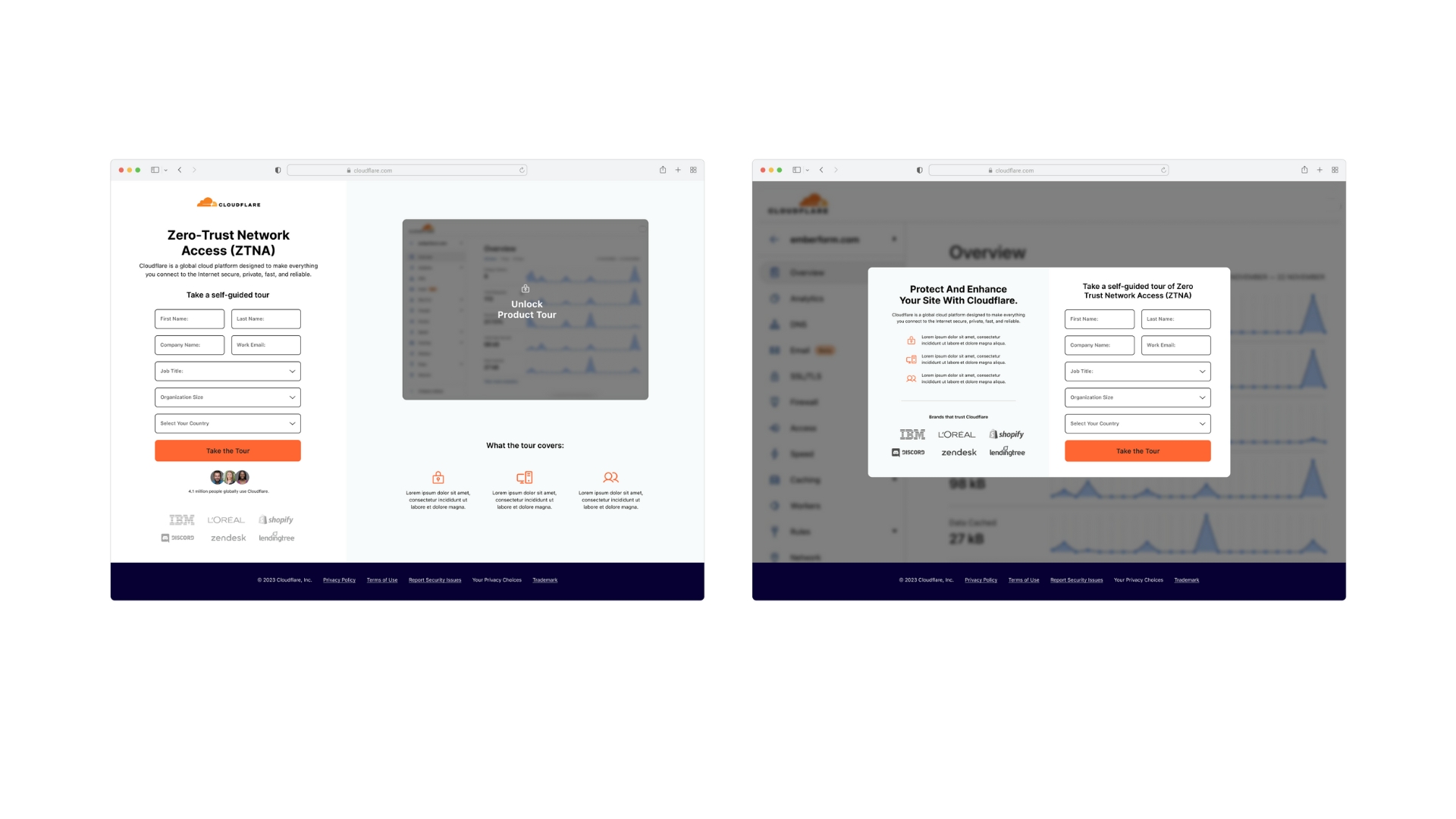
Interactive product tour driving qualified conversions

Industry-specific vertical landing pages

Solutions pages targeting enterprise buyer journey
Key Achievements
Drove 131% YoY increase in marketing-sourced pipeline via channel optimization and higher-intent lead prioritization.
Delivered 129% YoY improvement in pipeline per media dollar through tighter targeting and persona-level segmented messaging.
Modernized measurement into flexible, scalable data model (Skai, Tableau, BigQuery) enabling granular KPI optimization.
Shifted org from CPL to opportunity-based decisioning, improving signal quality.
Aligned the demand marketing org under a unified global view, reducing fragmentation and improving leadership clarity.
Built global KPI model and dashboards connecting spend to pipeline outcomes for executives and campaign owners.
Established channel optimization and lead-type prioritization rules for investment allocation (hand-raisers vs MQLs).
Created account and persona targeting framework with segmented practitioner/leadership messaging for in-market accounts.
Rebuilt conversion system across touchpoints (landing pages, lifecycle paths) to reduce friction and increase opportunity creation.
Key Takeaways
Outcomes beat volume
If your KPI rewards cheap leads, you will get cheap leads. Align measurement to pipeline and opportunity creation to change behavior fast.
Build a system, not a set of campaigns
In competitive markets, performance gains come from how the parts work together. Targeting, creative, conversion, and reporting must operate as one machine.
A single source of truth accelerates decision-making
When leaders and operators see performance the same way, you unlock faster iteration, clearer prioritization, and scalable execution.
Want to Learn More?
Explore additional examples of building measurement infrastructure and driving growth.